
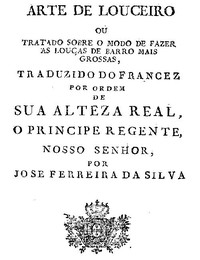
Arte de louceiro: Tratado sobre o modo de fazer as louças de barro mais grossas
Forget everything you think you know about 18th-century aristocratic hobbies. This isn't about philosophy, art, or music. 'Arte de louceiro: Tratado sobre o modo de fazer as louças de barro mais grossas' is Count Milly's deep dive into the world of coarse earthenware—the everyday pots, pans, and storage jars used by regular folks.
The Story
There's no traditional plot here. Instead, the book is a meticulous guide. Milly walks you through the entire process of creating this humble pottery. He starts with finding the right clay, explaining which soils work best. He details how to prepare it, how to build the basic forms on a potter's wheel, and the precise methods for firing the pieces in a kiln. He doesn't just give vague instructions; he gets into the gritty details that only a true enthusiast (or a very bored nobleman) would care about. It's a step-by-step manual for a craft that was essential but often overlooked by the educated elite of his time.
Why You Should Read It
This book is a quiet revolution. In an age obsessed with refinement, a count chose to document the 'art' of the common and the coarse. That's what hooked me. It feels like an act of respect. Milly isn't writing down to this craft; he's treating it with the seriousness of a science. Reading it, you get a real sense of the material world of the past—the weight of a water jug, the texture of a cooking pot. It turns an invisible, everyday object into something filled with intention and skill. It makes you look at the simplest things in your own kitchen differently.
Final Verdict
This is a niche gem, but a brilliant one. It's perfect for history buffs who want to move beyond kings and battles and understand the texture of daily life. It's for makers and crafters who will appreciate the detailed, timeless knowledge. And it's for any curious reader who loves finding books that are about the most unexpected subjects. It's not a page-turner in the usual sense, but it's a captivating look through a keyhole into a forgotten world of practical beauty.
This is a copyright-free edition. It serves as a testament to our shared literary heritage.
Barbara Flores
8 months agoText is crisp, making it easy to focus.
Linda Flores
1 year agoWithout a doubt, the depth of research presented here is truly commendable. Truly inspiring.
Susan Robinson
1 year agoFive stars!
Thomas Lewis
8 months agoFast paced, good book.






George Wright
1 year agoThis book was worth my time since it challenges the reader's perspective in an intellectual way. Thanks for sharing this review.