
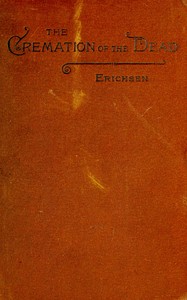
The cremation of the dead by Hugo Erichsen
Published in 1887, Hugo Erichsen's The Cremation of the Dead is less a narrative story and more a passionate manifesto. It captures a specific moment in history when the practice of cremation was moving from a fringe idea into mainstream conversation in the Western world.
The Story
There's no traditional plot with heroes and villains. The 'story' is the argument itself. Erichsen systematically builds his case for cremation. He starts by looking back at how different ancient cultures handled their dead. Then, he gets to the heart of his pitch: the practical and sanitary benefits for modern, growing cities. He argues that crowded cemeteries are a public health risk. The book addresses common fears and religious objections head-on, presenting cremation as a dignified, hygienic, and even beautiful alternative to burial. He talks about the technology of the time (early crematorium designs) and highlights the growing cremation societies that were popping up. The entire book is his effort to normalize an idea that felt very strange to most of his readers.
Why You Should Read It
What grabbed me was the sheer passion. Erichsen isn't a dry academic; he's a true believer trying to change minds. Reading his earnest arguments—which seem so obvious now—reminds you how all social progress starts with someone making a case that sounds radical. It’s a peek into the everyday concerns of the Victorian era that we rarely see: worry about disease, soil contamination, and the cost of funerals. You see the early threads of the modern environmental movement and public health advocacy. It makes you realize that the way we handle death isn't just tradition; it's a series of choices that someone, at some point, had to fight for.
Final Verdict
This book is a niche read, but a rewarding one. It’s perfect for history buffs who love primary sources that reveal past attitudes, or for anyone in the 'death positive' community curious about the origins of modern practices. If you enjoy books about forgotten social debates or the history of medicine, you'll find this captivating. It's not a light novel, but as a piece of historical advocacy, it’s incredibly clear, persuasive, and surprisingly human. Just don't go in expecting a ghost story—the real haunting here is by the past itself.
The copyright for this book has expired, making it public property. Thank you for supporting open literature.
Kevin Torres
1 year agoBased on the summary, I decided to read it and the clarity of the writing makes this accessible. Definitely a 5-star read.
Susan Wilson
1 year agoCompatible with my e-reader, thanks.
Linda Moore
8 months agoThanks for the recommendation.
Sarah Johnson
1 year agoComprehensive and well-researched.



Jennifer Rodriguez
2 years agoHaving followed this topic for years, I can say that the inclusion of diverse viewpoints strengthens the overall narrative. An excellent example of how quality digital books should be formatted.